
Suture Removal
Occasionally it is necessary for sutures that are placed either during surgery, or afterwards in the clinic, to be removed. Of course, you can find a physician or other healthcare worker to do this, but sometimes that is difficult because these individuals are not necessarily comfortable with removing sutures that were placed elsewhere. However, removing sutures is actually pretty easy once you know how.
There are basically two kinds of suture placement: running or interrupted. In general, we are only referring to interrupted sutures in this discussion, because that is the kind that we use the most in cleft lift surgery. Interrupted sutures are each an individual loop with a knot; not connected to any other sutures. This makes removal very straightforward.
Removing Skin Sutures
If sutures were placed to support the skin closure, they are usually made of a black, smooth, nylon and will not dissolve. So, it is important to remove all the suture material and not leave any under the skin. Here is how to do this:
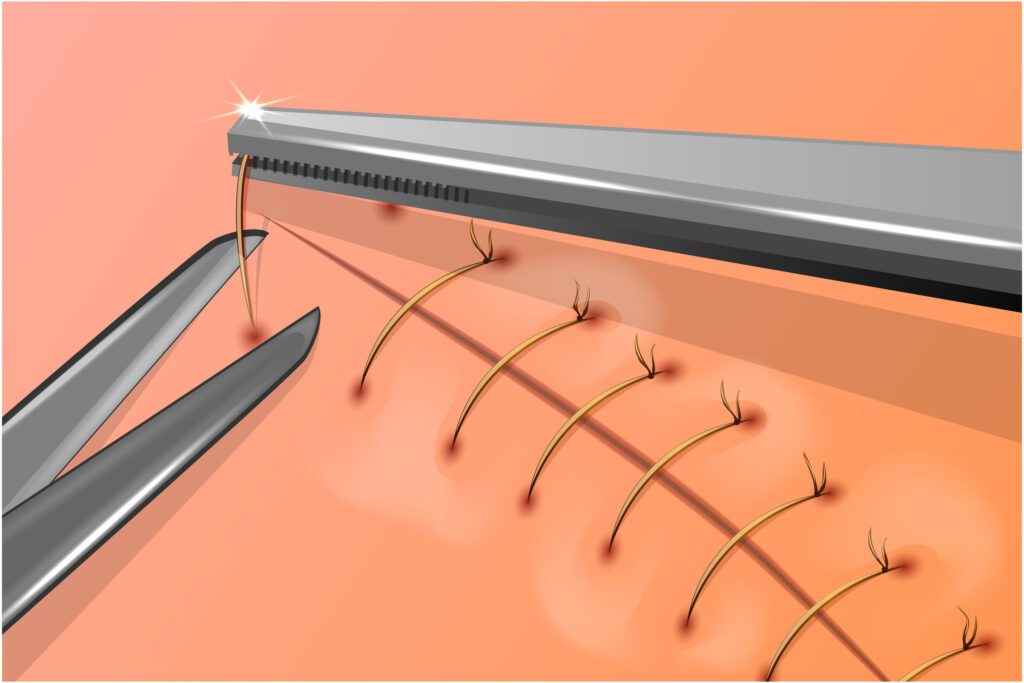
- Wipe the skin and suture with alcohol or some other antiseptic
- Grasp the suture with a tweezers or some other fine grasping implement
- Visualize the two limbs of the loop and cut ONLY ONE limb of the loop with a small scissors
- Grasp the knot with the tweezers, and remove it by pulling it straight out and away from the skin
- If there is any bleeding, just apply pressure for a few minutes and it will stop
What NOT to do:
- Do not cut both limbs of the circular suture
- Do not grasp the lower cut-end of the suture and try to pull the knot through the skin
Removing Deep Sutures
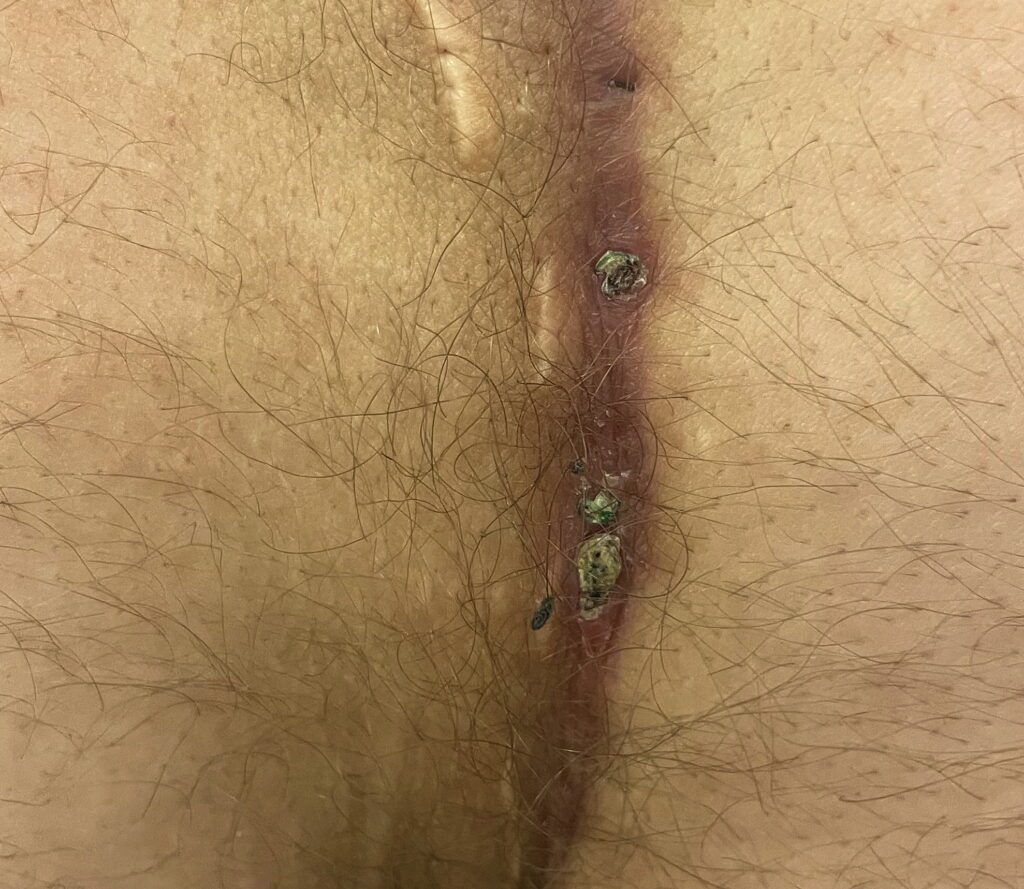
If there is a suture under the skin that is causing a reaction, and at least 4-6 weeks has elapsed since the surgery, it is safe to remove it. These sutures are also a loop, but may be a bit more of a challenge to remove unless you can get a good grasp on the knot – but once you are able to grasp it, the method is exactly the same. These sutures are usually a blue/green color and pretty easy to visualize. The suture material for the deeper sutures will eventually dissolve, but it can take quite a few months – so if one is visible and causing problems, removal will speed up the resolution of any issues it is causing. However, if any is left behind in the deeper tissues it is not a significant problem since it will eventually degrade and be absorbed.
In the photo to the right several blue/green sutures are visible 4 months after surgery. Healing will be improved if they are removed.