Normal and abnormal appearance of bulb suction drainage after a cleft lift operation
Often patients ask us what the drain output should look like, and when it is abnormal enough to contact us. Sometimes patients just sense that the appearance of the fluid “just doesn’t look right” and contact us. This web page has examples of normal and abnormal drain fluid, and when you should notify us because of a change in character of the fluid.
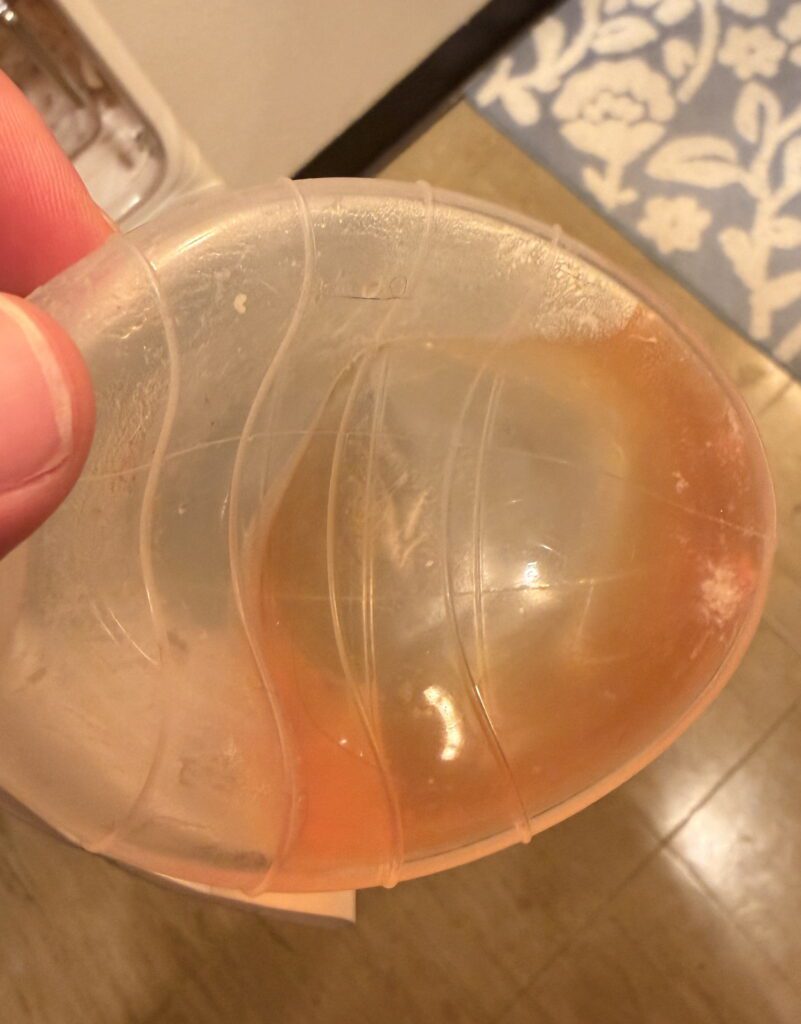
This is normal drainage color. The terminology for this is “serous drainage”. It is usually yellow in color.
Serous drainage
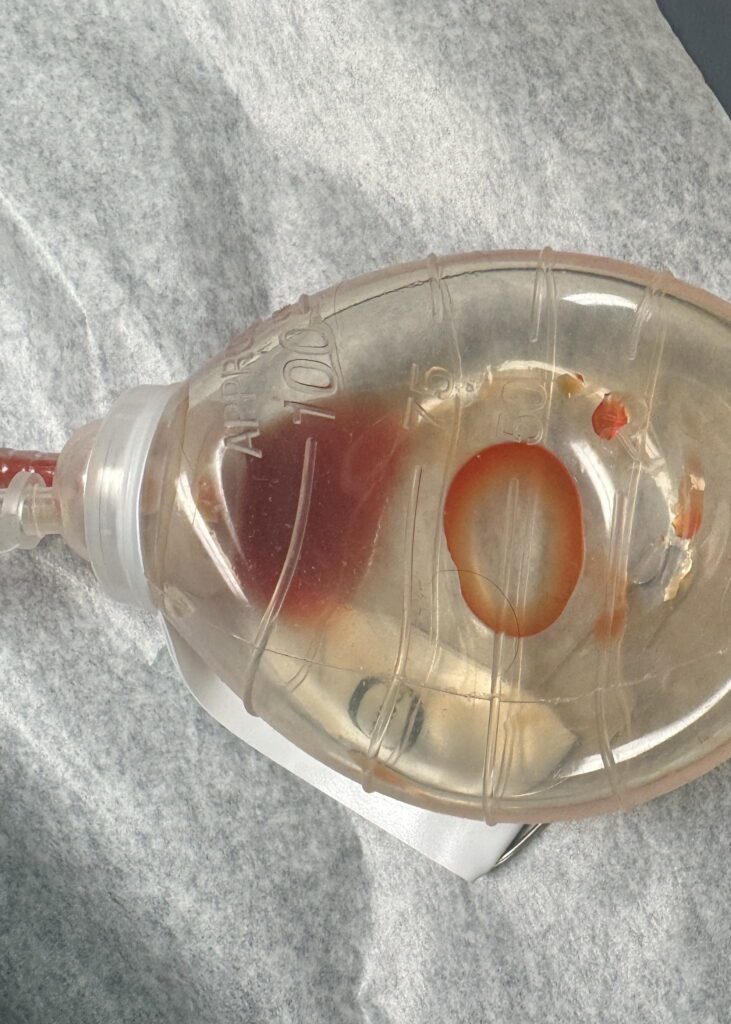
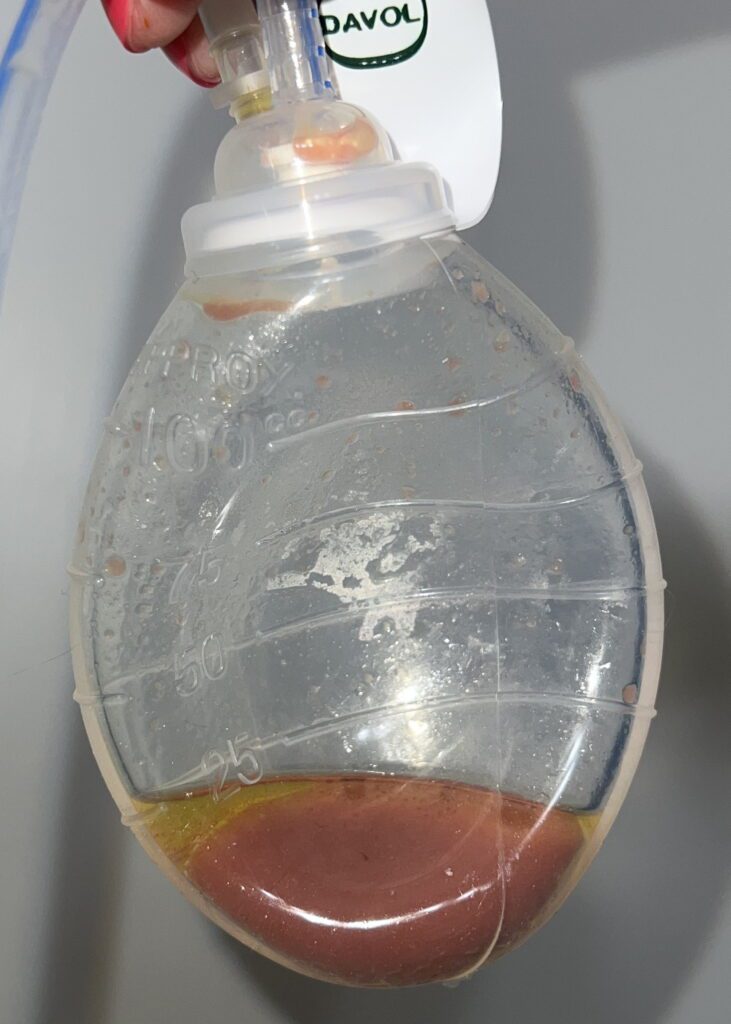
If there is a little blood in the serous drainage, it will turn red or orange. This is also a normal drainage color. The terminology for this is “sero-sanguineous drainage”. Often the fluid is somewhere between the serous fluid image and this one. Other times, it is a bit more bloody. This is all normal.
Sero-sanguineous Drainage
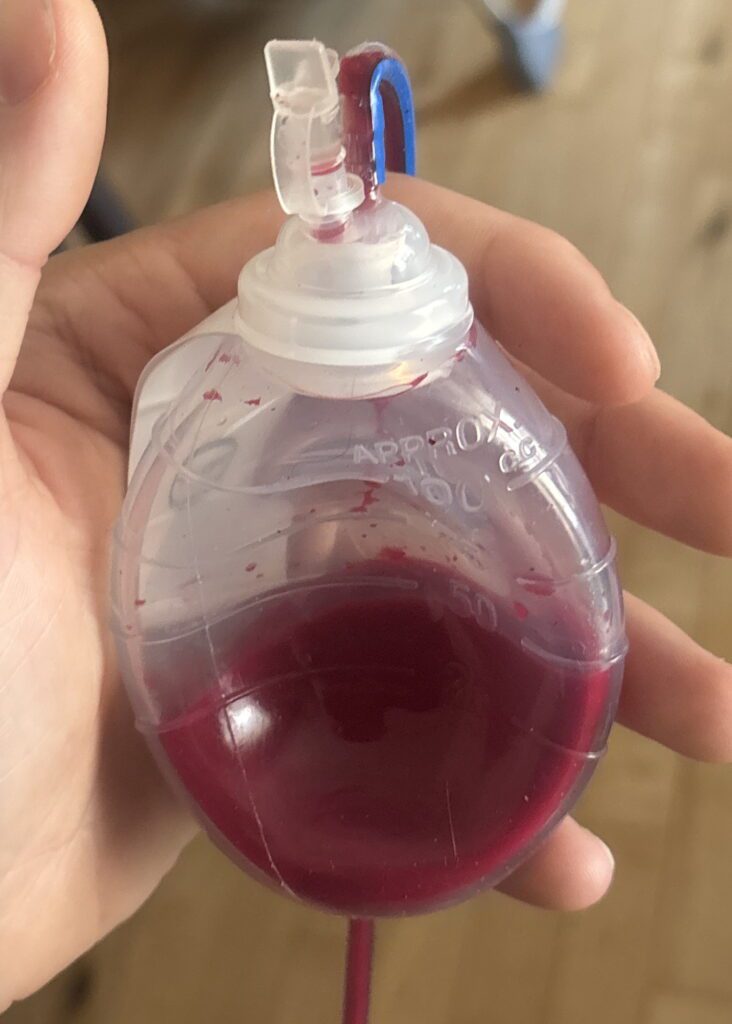
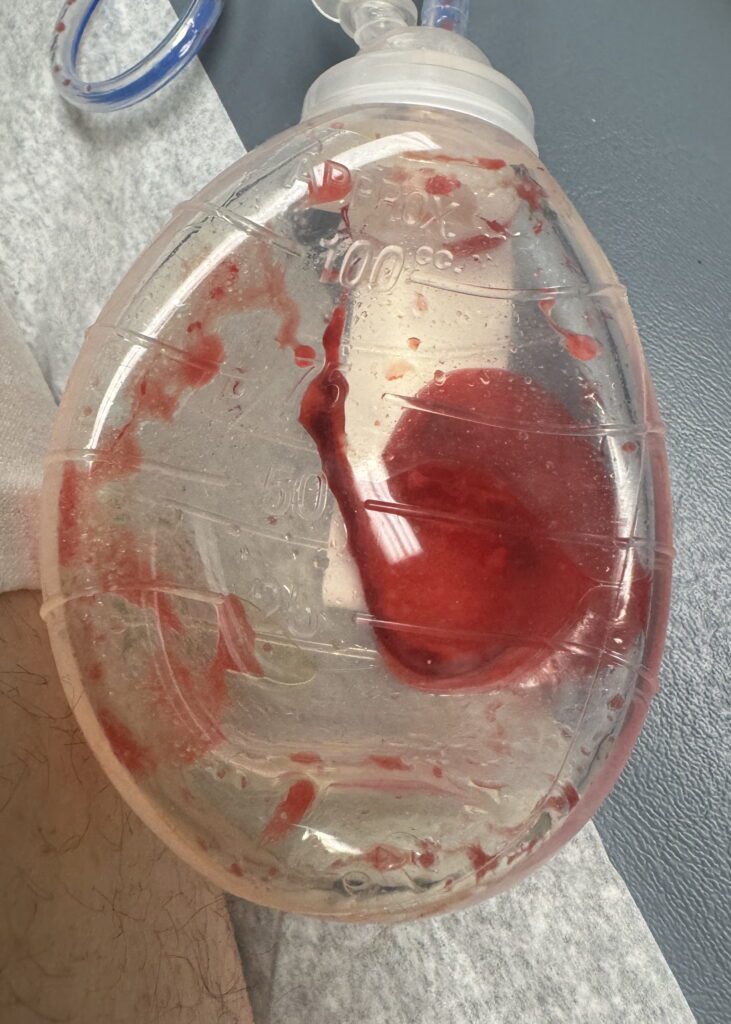
This is an example of what we would call “bloody drainage”. It is red blood, it is somewhat thick, and it may start clotting in the bulb, which can make it difficult to empty the bulb because it is so thick. How abnormal this is depends on the volume: 20-40cc during the day may not be a problem. Significantly more than that, associated with bruising is definitely an unusual amount of bleeding, and should be brought to our attention.
Bloody Drainage
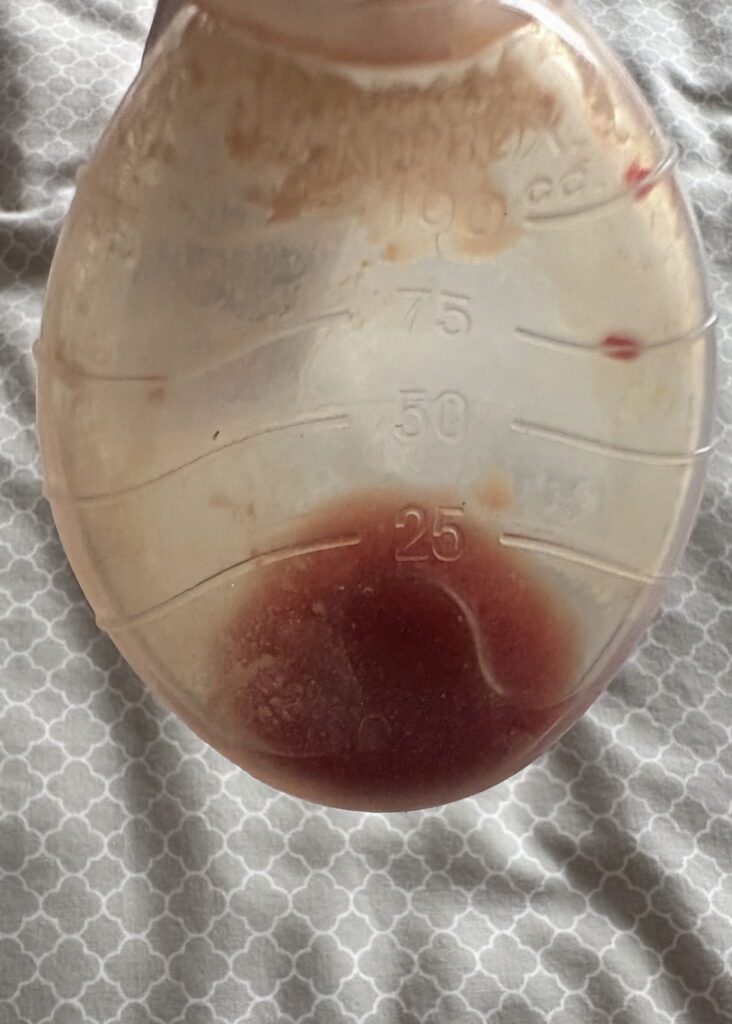
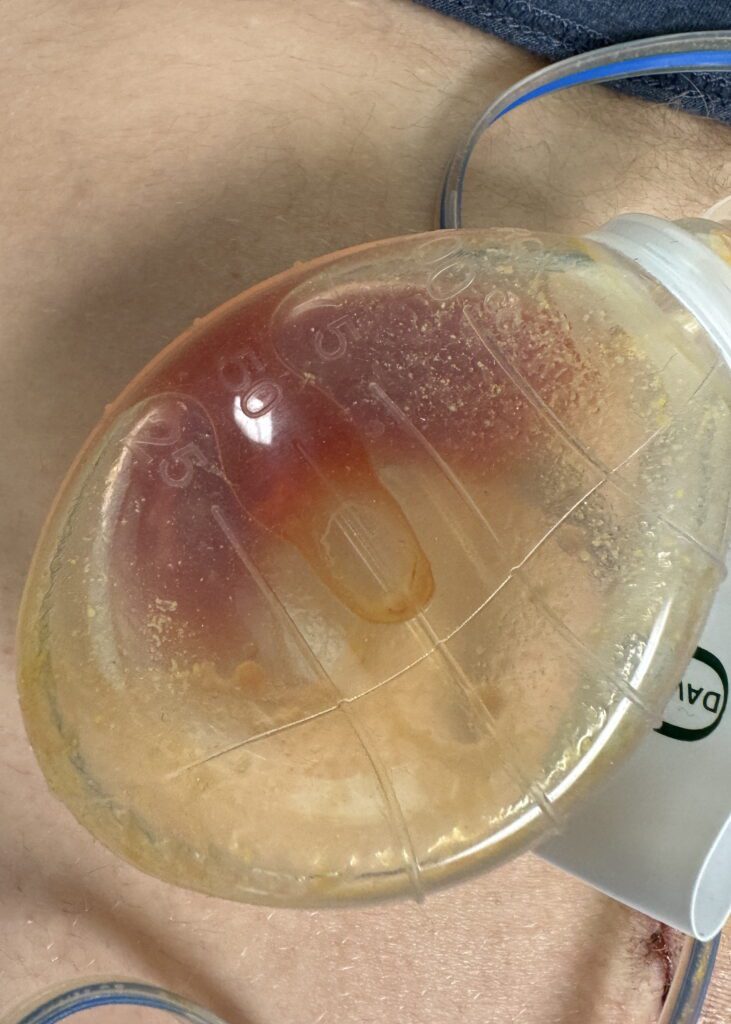
If the serosanguineous drainage starts having particles of protein in the fluid, we describe it as “cloudy”. Sometimes this means nothing, and other times it is the first sign of infection. When to call appearance like this “cloudy” can be very subjective, and may be confusing. But, when we see this we may delay removing the drain and add additional antibiotics in case it does represent infection.
Cloudy Drainage
Here is another example of cloudy drainage, because it can be confusing.
Another example of cloudy drainage
If the fluid is infected, it becomes creamy. The medical term for this is “purulent”. When the drainage looks like this, we need to know right away. In situations like this we leave the drain in place until the drainage appears serous, and we usually change or add antibiotics.
Sometimes, the creamy appearance is first seen in the drain tubing, and can stand out as being distinctly different than the previous serous or serosanguineous drainage.
Purulent Drainage
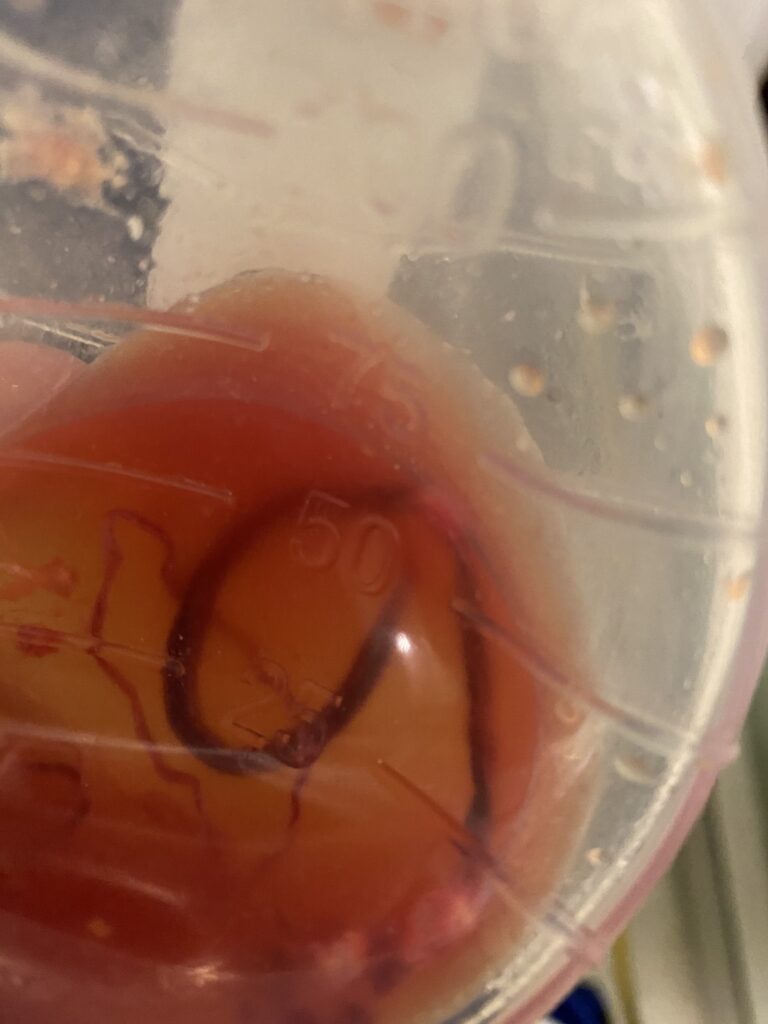
If there are strings or “worm like” particles in the drainage, that may or may not indicate infection. In the first image, the fluid around the strings is cloudy, and this was an indicator of infection. In the second image, the fluid is serous, and this was not infected.
Stringy Drainage: Infected
Stringy Drainage: Not infected
Whenever you are concerned, it is reasonable to send us a photo. In general, a clear photo of the fluid in the bulb against a white background is best. Just a photo of the tubing will not show us what we need to see. The fluid in a cup can be helpful also, but photos in the bulb, as the ones above, will usually give us the most information.