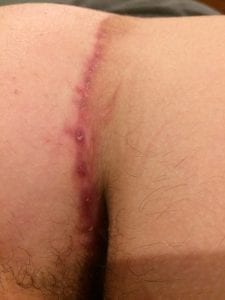
Suture related problems
In general, we want a suture material that eventually dissolves so that there is not any permanent foreign material left in the wound. We surgeons have many kinds of dissolving sutures at our disposal, and it has taken us a while to find the suture material that provides the strength needed, but with the least problems. The sutures I use begin losing their strength in 4-6 weeks, but take as much as 6 months or longer to completely dissolve.
I use a synthetic (man-made) monofilament suture (smooth, single-strand, like a fishing line). This kind of suture material dissolves over time by the action of enzymes in the tissues. Unfortunately, there is no suture material that provides strength for six weeks, and then instantly disappears.
Suture material can cause reactions long after its job is done. These reactions can cause:
- red bumps
- areas of drainage
- areas of bleeding
- thickening of the scar
- small wound separations
In patients with pilonidal disease this can cause a lot of anxiety, as it can easily be confused with recurrence of the pilonidal disease itself. I encourage patients to send me photos of any areas of concern so I can tell them the cause of the visible change. Patients with pre-existing autoimmune diseases (especially those with hidradenitis suppurativa) seem to be prone to having reactions to these sutures. Patients who had a contaminated or infected wound are also prone to these problems, some of which are related to bacteria attaching to the suture material and then causing problems later.
These suture-related problems are always self-limiting – because the suture material eventually dissolves. If there is an area of drainage, it is OK to clean it with peroxide, and put a dry dressing on it. If the area is down near the anus, putting a piece of gauze between the cheeks, as you may have done initially post-op is a good idea until it stops draining. If the problem is occuring after the 6 week healing period, and a suture is protruding, it is safe to remove it.
Below are a few photos of what this can look like. These patients went on to heal without any kind of surgical intervention. Typically, I recommend Vitamin C Serum to treat these.
Click here for more information about VITAMIN C SERUM.
Patient with an irritated suture 4 months after surgery.
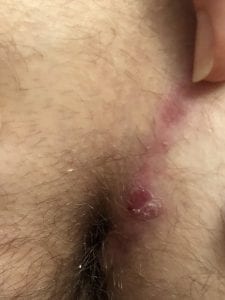
Several bumps on the incision from irritated suture material.