
• JUNE 10, 2025
    • 0
    Packing

    Packing

    What is “packing”, and do I need it?

    “Packing” doesn’t mean that your pilonidal cyst is going on a trip! Packing refers to the situation where an abscess (pocket of infection) is drained (lanced) and filled with gauze; or a situation where a surgical wound separates, and is filled with gauze. The concept behind this is that the gauze “packing” keeps the skin from closing over the underlying cavity too quickly. This, hopefully, will prevent the skin healing over an empty cavity, which can then become infected.

    How does this work?

    The packing is usually a long strip of gauze, sometimes impregnated with a chemical called iodoform. It is usually packed into the cavity by a surgeon, nurse, or wound care specialist using some sort of forceps (tweezers). Inserting the gauze may or may not be painful, depending on how recent the wound or abscess cavity is; the newer the wound, the more sensitive it can be. The same goes for removing the gauze.

    Depending on the situation and the preference of the physicians involved, they may require that the packing be left in place for a few days and then removed, removed and replaced every few days, or removed and replaced daily. This may require coming into the ER or clinic for each packing change.

    Is packing always necessary?

    Well…we surgeons all have our own training and experience, and certainly have different opinions. But, in our clinic we rarely use packing in any situation. In general, it actually delays healing by not allowing the wound or abscess cavity to collapse and fill in with normal tissue. Having to change the packing creates a complex and uncomfortable series of encounters, which are rarely necessary. And, the iodoform, which is often used on the gauze is unnecessary as well. There is a theory that it helps fight infection – but there is no evidence that it actually does that.

    Are there situations when packing is really necessary?

    Yes. Sometimes when a large, acute, abscess is drained, there can be a lot of bleeding from the inflamed, infected tissues. In that case, sometimes the best way to stop the bleeding is to pack it with gauze, and come back in a day or two, when the bleeding has stopped, and remove the gauze.

    In summary…

    Of course, you have to follow the instructions of your current healthcare providers. In our clinic, packing is not really a modality that we use for abscesses, or in the rare situations where we have some slight separation of a cleft lift incision. We do not perform open or closed excisions, which surgeons often pack, because we don’t agree that it is an appropriate operation to treat pilonidal cysts or sinuses in any situation.

    However, hopefully this discussion will help put the “packing” concept into perspective.

    Read more

    • APRIL 24, 2025
    • 0
    Dr. Immerman’s Pilonidal Research is Making a Difference

    Dr. Immerman’s Pilonidal Research is Making a Difference

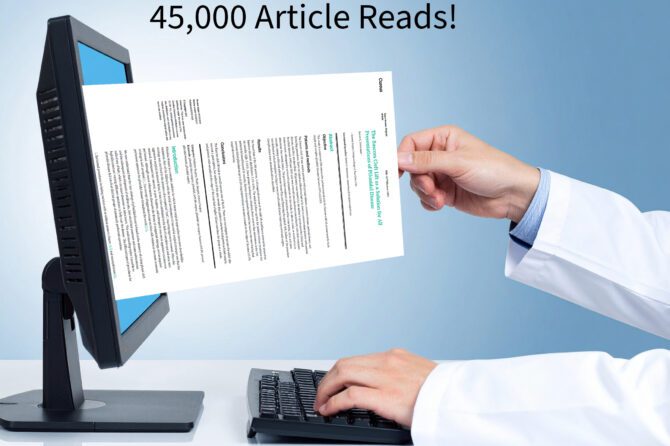
    In 2021 Dr. Immerman published an article titled “The Bascom Cleft Lift as a Solution for All Presentations of Pilonidal Disease”. This was the first study proposing that any kind of pilonidal problem, ranging from small symptomatic pits, to recurrent sinuses, to large perianal wounds – can be successfully treated with the cleft lift procedure. Of course, this is controversial, and many surgeons prefer to try other modalities first. However, in this article 700 patients are followed and Dr. Immerman demonstrates an overall success rate of 96.6%. This is one of the largest series of cleft lift patients reported, and some of the best results.

    One of the advantages of publishing open-source medical articles is that they are available to anyone on the internet. The goal of publishing studies like this is to educate both the public and physicians about the success of this procedure. Another advantage, is that we can track how many times the article is viewed. The article can be found on both the Cureus Journal of Medical Science website (published by the prestigious Springer Nature company), and also on PubMed, which is a free, publicly available search tool maintained by the National Institutes of Health (NIH) for biomedical and life sciences literature. As of this date, this article has been read over 45,000 times!As of spring 2025 Dr. Immerman has performed the cleft lift operation on well over 1400 patients, and the results are almost exactly the same as in the 700 patient study. Hopefully, this information will help other surgeons decide to learn the cleft lift operation, and increase the level of excellence in pilonidal care throughout the world.

    Read more
    • MARCH 2, 2025
    • 0
    Is a Cleft Lift Appropriate for “Mild” Pilonidal Disease?

    Is a Cleft Lift Appropriate for “Mild” Pilonidal Disease?

    Is a cleft lift for mild pilonidal disease like “going after a fly with an elephant gun”?

    Many surgeons feel that for very severe pilonidal disease the cleft lift is the best option when performed by an experienced pilonidal surgeon. But, what is the best approach for patients with mild disease? This is a very commonly asked question, and if you ask ten surgeons, you will get ten different answers which range from:

    • “it’s not so bad, just live with it”.
    • “just keep it clean, and perform hair removal and it may be fine”.
    • “just wait until you are 40 years old, and it will all go away”.
    • “you are a candidate for pit picking (or some other “minimally invasive” pilonidal operation)”.
    • all the way to a recommendation for some sort of flap procedure, including the cleft lift.

    So, what is the answer?

    Unfortunately, there is no absolute answer that fits with every patients needs, and every surgeon’s skill-set. But, as the patient your best approach is to try to understand all the options available to you, and attempt to choose the one that meets your philosophy of how you would like to be treated. Fortunately, pilonidal disease is not a life-threatening condition, and the goal is to take care if it in a way that meets your needs.

    Here are some facts:

    • If you have been diagnosed with pilonidal disease the idea that it will go away with no treatment is wishful thinking.
    • Pilonidal disease is not caused by obesity, poor hygiene, sitting, or excessive hair, and addressing these issues will not make the disease disappear.
    • Although it is unusual for new pilonidal disease to appear after age 40, previous untreated disease will not magically disappear once that age is attained.
    • There are many “minimally invasive” pilonidal operations that all are very similar in their concept, which is to remove the sinus and hope things heal and don’t recur. These include pit picking (Bascom1), Gips Procedure, EPSiT (Endoscopic Pilonidal Sinus Treatment), SiLac (laser surgery), Fibrin Glue, Kshar Sutra, Phenol, RFA, and Seton Treatment. It is my estimation that these all have a long term success rate that, at best, is 70% (in other words, about 1 in 3 will ultimately fail). Many of these require more than one treatment in order to obtain the 70% success rate.
    • There is no harm in trying the minimally invasive treatments as it pertains to future more aggressive surgery, but there is time, expense, discomfort, and the disruption involved with having medical procedures.
    • Excisional procedures such as “open excision” or “closed excision” are antiquated procedures and should not be performed at the current time. They have success rates in the 30-50% range, and have a long, painful and difficult recovery.
    • In experienced hands, the cleft lift procedure has a long term success rate over 95%.

    How we handle pilonidal disease in our clinic

    We only perform the cleft lift procedure because of our excellent results and the ease of recovery when compared to the other procedures. We have no quarrel with the idea of performing a minimally invasive procedure first and hoping it works, but we will not perform these procedures because of the high failure rate, which is an especially significant issue when patients are traveling across the country to see us.

    Dr. Immerman published a paper approaching this form the point of view that the cleft lift is reasonable for all presentations of pilonidal disease, and it is an open-source article and can be read by following this link. In patients who present with minimal pilonidal disease the success rate is 99%. This paper followed 700 patients, and at this time we have continued to track our experience with 1400 patients, and the data has not changed.

    Dr. Immerman also published a paper on patient satisfaction after the cleft lift procedure, and that can be viewed here. In this study, of the 500 respondents, 494 (98.8%) were “extremely satisfied” or “satisfied” with their procedure. There is more detail in the article.

    So, as you can see there is no “absolute answer”, but hopefully this web page has answered some questions, and will help you organize your research so you can come up with the treatment plan that works best for you.

    Read more
    • OCTOBER 19, 2024
    • 0
    Dr. Immerman speaks at the International Pilonidal Society meeting in Turkey

    Dr. Immerman speaks at the International Pilonidal Society meeting in Turkey

    In October of 2024 Dr. Immerman presented several lectures on his surgical technique and results with the cleft lift procedure to an international audience of pilonidal surgeons and physicians at Medipol University in Istanbul, Turkey. Many world leaders and innovators in this area of surgery were present, including Dr. Immerman and Dr. Daniels, as well as Dr. Shrager, Dr. Zapotoczny, and Dr. Tom Bascom. This was part of a two day meeting devoted only to the recognition and treatment of pilonidal disease, and is the fourth time that Dr. Immerman has presented his research and findings to this society. Several surgeons spoke about the benefits of the cleft lift procedure which has consistently shown the best results of any of the various treatment options. The International Pilonidal Society is the only organization which focuses specifically on pilonidal disease and its treatment. This was an extremely valuable meeting for all in attendance and was worth traveling almost half-way across the world  to attend. Meetings like this will help educate physicians regarding the most successful ways to treat this disease.

    Read more